Dcn. Nathan Budde's Priestly Ordination Information
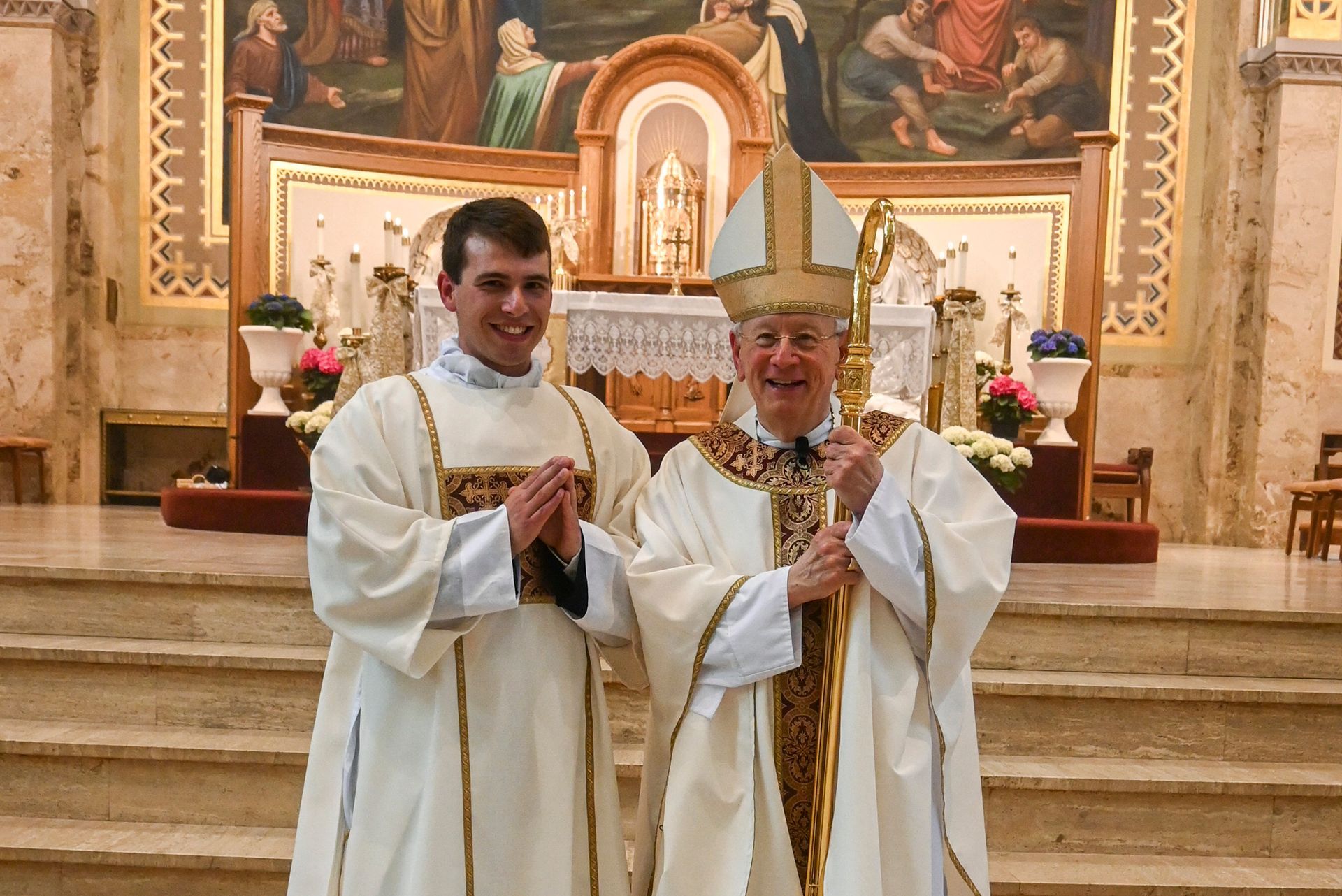
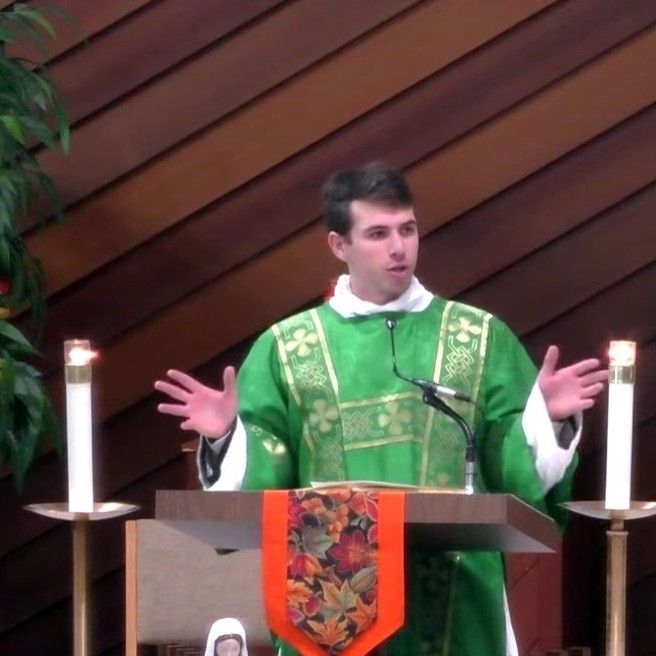
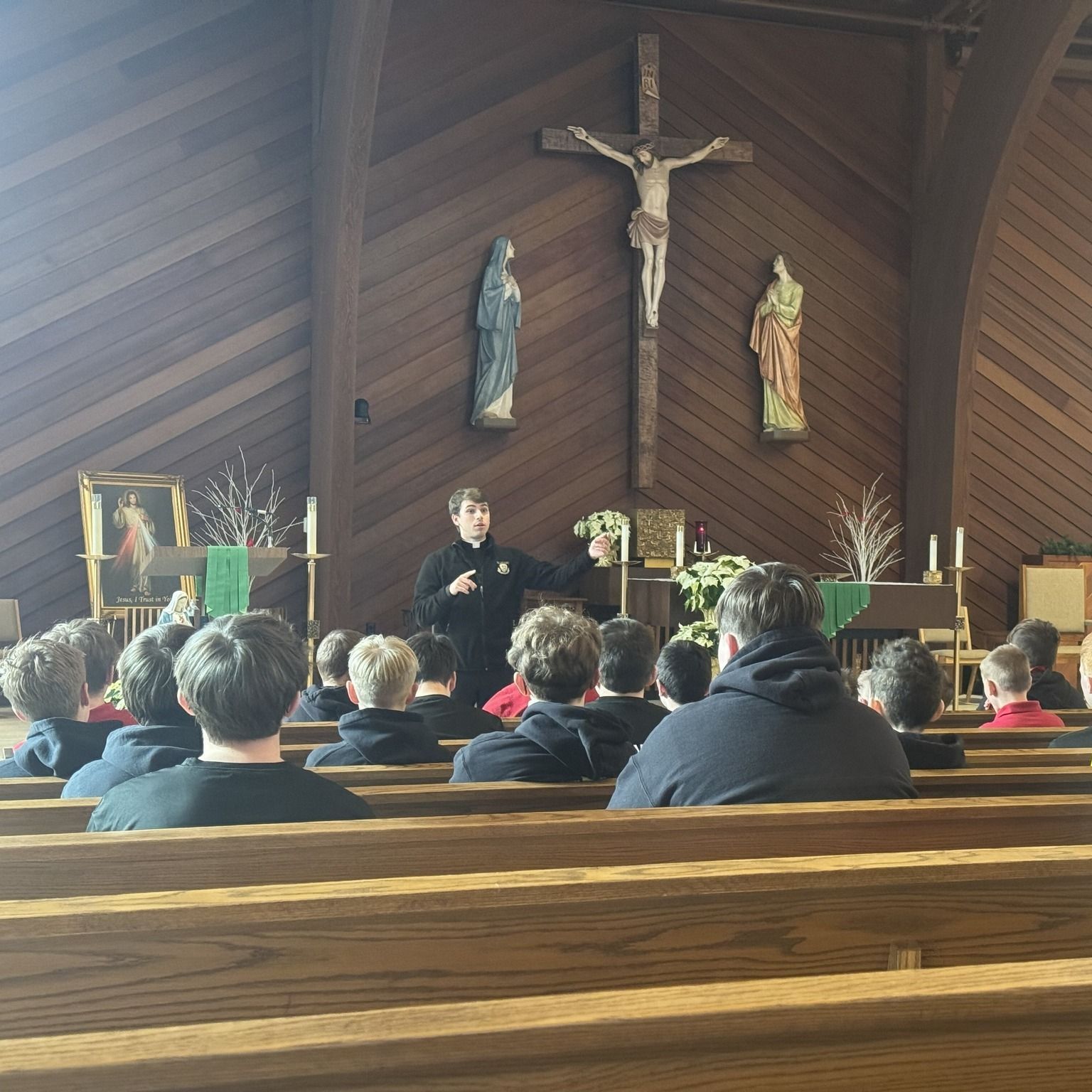
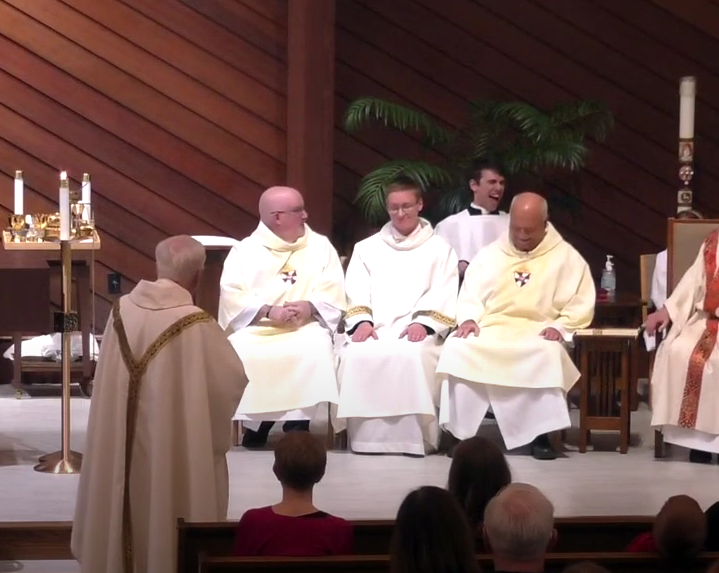
Deacon Nathan Budde- one of our former parish seminarians visiting from the Diocese of Green Bay, WI- will be ordained to the priesthood on Saturday, May 30. You are invited to support Dcn. Nathan through prayer and by following along with the ordination and other celebrations surrounding this blessed occasion.
Ordination & Other Masses
Ordination | Saturday, May 30, 10 a.m. at St. Francis Xavier Cathedral, Green Bay, WI
The Ordination Mass is open to the public, with a light reception and opportunity to receive a blessing to follow. This Mass is also livestreamed.
First Mass | Sunday, May 31, 2 p.m. at St. Mary Catholic Church, De Pere, WI
This Mass is open to the public with a light reception and opportunity to receive a blessing to follow.
Masses of Thanksgiving at St. Leonard | Sunday, June 21, 9 a.m. and 11 a.m.
Light refreshments to follow these two Masses only. Our 9 a.m. Mass is also livestreamed. These Masses are also opportunities to receive a Plenary Indulgence.
Continue reading below to learn more about indulgences and how to prepare to receive it.
What is a plenary indulgence, and how do they work?
Sins are forgiven through the Sacrament of Reconciliation, wiping away the burden of guilt and restoring union with God and the Body of Christ. However, sins also have effects called temporal punishments, which need to be amended/purified before reaching perfect union with God (i.e. Heaven). Read more about sin in The Catechism of the Catholic Church paragraphs 1854-1864.
Here is a narrative to illustrate the difference between forgiveness of sins and remission of temporal punishment: While playing baseball in the backyard, a child breaks their neighbor's window. The child admits that they broke the window and apologizes. The neighbor forgives them, but the window is still broken. The child's apology and the neighbor's forgiveness are like the forgiveness of sins in confession. The broken window is like the temporal punishment for sins. This is amended/purified in Purgatory, or, with indulgences.
Indulgences are obtained through prayers and spiritual acts. There are two kinds:
- A partial indulgence removes a portion of the temporal punishment.
- A plenary indulgence removes all temporal punishment due to sin.
What happens if I sin again after receiving a Plenary Indulgence?
Plenary Indulgences do not apply to future sins. They remove all temporal punishment due to sins that have already been forgiven in confession. In other words, they are not a "free pass" to sin going forward. Any sins committed after receiving an indulgence must still be confessed and absolved in the Sacrament of Reconciliation. You can read more about indulgences in The Catechism of the Catholic Church, paragraphs 1471-1479.
Opportunity for a Plenary Indulgence at St. Leonard
Those who attend one of Deacon (soon to be Father) Nathan Budde's Masses of Thanksgiving at St. Leonard have the opportunity to receive a Plenary Indulgence. These Masses will be on Sunday, June 21 at 9 a.m. and 11 a.m. Read this short letter for the conditions to receive the indulgence or continue reading below.
What do I need to do to receive the Plenary Indulgence?
To receive the plenary indulgence, individuals must meet the following requirements:
- The individual must be Catholic, not excommunicated or in a schism
- The individual must have the interior disposition of complete detachment from sin, even venial sin. In other words, one must have the desire to avoid sin and remain close to God.
- The individual must complete the following within 20 days before or after the indulgence act*:
- Attend the Sacrament of Reconciliation
- Receive Holy Communion.
- Pray for the Pope's intentions. Any prayer for these intentions suffices, but the Our Father and Hail Mary are recommended.
4. The individual must participate in the *indulgence act- in this case, attend one of Dcn. Nathan Budde's Masses of Thanksgiving at St. Leonard on Sunday, June 21, 9 a.m. or 11 a.m.
Did you know?
Indulgences can be applied either to oneself or to the souls of the deceased, but they cannot be applied to other people living on earth.